


Short answer: Your ICBC driver factor is a number with three decimal places that shows ICBC how risky you are on the road. It starts from a reference point of 1.000. A number below 1.000 means lower risk, and a number above 1.000 means higher risk. It is based mainly on your driving experience and your at-fault crash history, and it improves as you gain experience and each year you stay out of at-fault crashes.
ਪੰਜਾਬੀ: ICBC ਡਰਾਈਵਰ ਫੈਕਟਰ ਇੱਕ ਨੰਬਰ ਹੈ ਜੋ ਤੁਹਾਡੇ ਡਰਾਈਵਿੰਗ ਤਜਰਬੇ ਅਤੇ ਕਰੈਸ਼ ਹਿਸਟਰੀ ਨੂੰ ਦਿਖਾਉਂਦਾ ਹੈ, ਅਤੇ 1.000 ਤੋਂ ਘੱਟ ਨੰਬਰ ਦਾ ਮਤਲਬ ਘੱਟ ਰਿਸਕ ਹੈ। ਆਪਣੀ ਰਿਪੋਰਟ ਸਮਝਣ ਜਾਂ ICBC ਰੀਨਿਊਅਲ ਲਈ ਮੈਨੂੰ ਕਾਲ ਕਰੋ, WhatsApp: 778-793-3322।
हिंदी: ICBC ड्राइवर फैक्टर एक नंबर है जो आपके ड्राइविंग अनुभव और क्रैश हिस्ट्री को दिखाता है, और 1.000 से कम नंबर का मतलब कम जोखिम है। अपनी रिपोर्ट समझने या ICBC रिन्यूअल के लिए मुझे कॉल करें, WhatsApp: 778-793-3322।
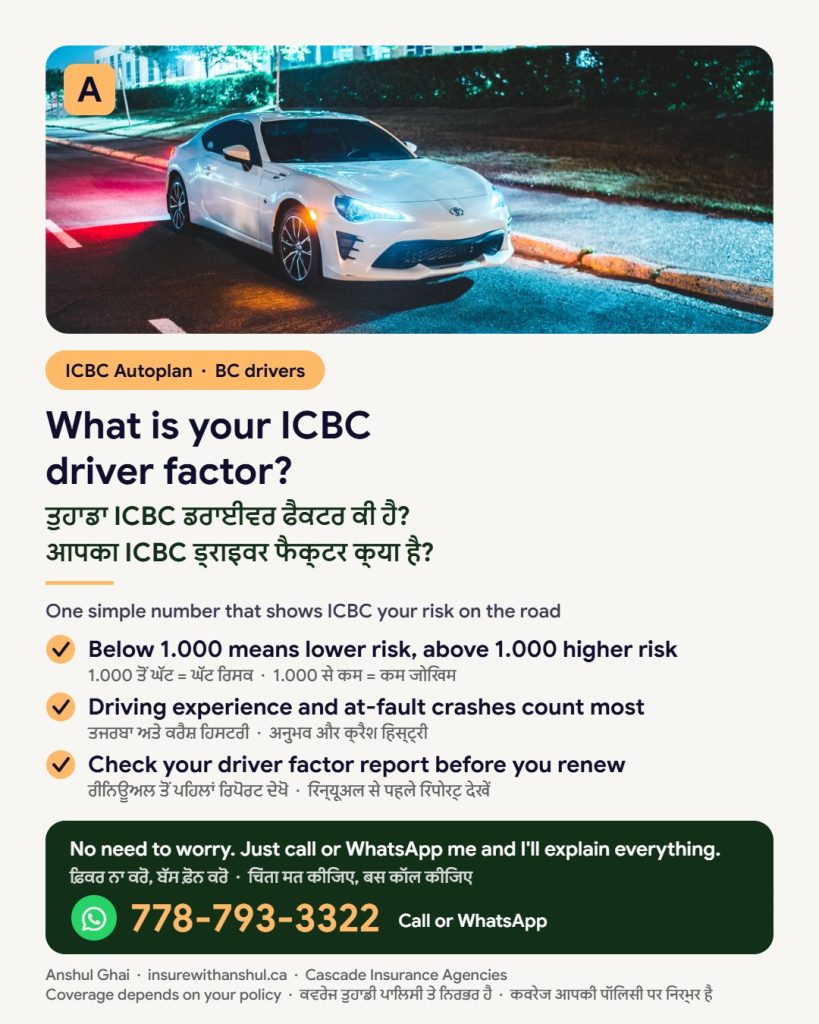
If you have looked at your Autoplan renewal and wondered why the number changed, you are not alone. The ICBC driver factor is one of the parts of your premium that people ask me about most. This guide explains it in plain words, so you know what the number means, what moves it up or down, and what to check before your next renewal.
What is the ICBC driver factor?
Every driver in BC has a driver factor. ICBC describes it as a three-decimal number that represents your risk on the road. The reference point is 1.000. If your number is lower, ICBC sees you as a lower risk. If it is higher, ICBC sees you as a higher risk.
Some people search for it as the “ICBC driving factor” or “driving factor ICBC”. It is the same thing. ICBC’s own name for it is the driver factor.
The important thing to know is that your driver factor is only one part of what you pay. Your car, how you use it, where you live and the coverage you choose all count too. You can read ICBC’s own explanation on its driver factor page.
How is the ICBC driver factor worked out?
ICBC says the driver factor mainly looks at four things:
- Driving experience: how many years you have been driving. ICBC recognizes up to 40 years of driving experience for Basic insurance discounts, so each year of experience counts.
- Crash history: at-fault crashes on your record. The more crashes you cause, the more you pay.
- Senior status: if it applies to you, it is shown on your report.
- New resident status: if you have moved to BC, your experience from another place can count. My ICBC guide for newcomers explains this step by step.
A crash follows the driver, not the car. If a friend borrows your car and causes a crash, ICBC says the claim goes on your friend’s crash history, not yours.
How does a crash change your ICBC driver factor?
An at-fault crash makes your ICBC driver factor go up, which means higher risk and usually a higher premium at renewal. ICBC looks back at your crash history over a set period called the scan period.
Right now, ICBC looks back at at-fault crashes from March 1, 2017 onward. ICBC says it will keep looking back to that date until 2027. From then on, it will look back over the last ten years at each renewal.
There are two more rules worth knowing:
- Crash forgiveness: ICBC forgives one crash once you have 20 years of driving experience (at least 10 in BC), as long as you have had no at-fault crashes in the last 10 years.
- Repaying a small claim: after a minor crash with no injuries, it may make sense to repay ICBC for the damage so the claim does not affect your future premium. Ask your Autoplan broker before you decide.
Driving tickets are a separate issue. ICBC says two minor offences or one serious offence (such as distracted driving) can raise what you pay for some Optional coverages, like Collision and Extended Third Party Liability.
How do listed drivers affect your ICBC driver factor and premium?
When you buy or renew, you list the people who drive your car. ICBC then works out a combined factor for the policy. It uses up to two drivers: the principal driver (the person who drives the car most) and the listed driver with the highest risk.
ICBC says most of the driver portion is based on the principal driver, and the rest is based on the highest-risk listed driver. This is why your own driver factor and your policy’s combined factor are often not the same number. Discounts and where you live also go into the combined factor.
So if a new driver in your family is listed on your car, the combined factor can change even if your own record is clean. Listing drivers does not always mean you pay more. It depends on each person’s experience and crash history.
How do I get my ICBC driver factor report?
You can download your driver factor report from ICBC online. It shows your ICBC driver factor, your driving experience, the claims that count, and your senior status if it applies.
If someone wants to list you as a driver on their car, you can share the downloaded report with them. If the download does not work, ICBC has a consent form that lets a broker share your claims history with the person listing you.
Many people search for an “ICBC driver factor chart”. ICBC does not publish one simple chart, because the number depends on your own mix of experience and crashes. Your report is the most accurate place to see your number.
Does the ICBC driver factor go down over time?
Yes. ICBC says your driver factor improves as you gain driving experience and for each year you stay out of at-fault crashes. Older at-fault crashes also stop counting once they fall outside the scan period.
There is no trick to speed this up. The steady way is safe driving, careful listing of drivers, and checking your report before each renewal so there are no surprises.
ICBC driver factor checklist before your renewal
- Download your driver factor report and check that your years of experience look right.
- Check that every at-fault crash on the report is really yours.
- List everyone who drives your car, including household members and regular drivers.
- If you are new to BC, bring proof of your driving experience from your home country or province.
- After a small crash, ask about repaying the claim before your renewal.
- Use ICBC’s online estimate tool once you have your renewal reminder.
For a full picture of your car insurance options in Surrey, see my car insurance in Surrey page. If you want to renew in person, my Autoplan office in Surrey is in Newton, and I also do renewals by phone or email so you don’t need to leave work. You can also read ways to keep ICBC premiums under control.
ICBC driver factor: frequently asked questions
What is a good ICBC driver factor?
ICBC uses 1.000 as the reference point. A number below 1.000 means ICBC sees you as a lower risk, and a number above 1.000 means a higher risk. Your number gets better as you gain driving experience and each year you have no at-fault crashes.
How long does a crash affect my ICBC driver factor?
ICBC currently looks back at at-fault crashes from March 1, 2017 onward. It will keep using that date until 2027, and after that it will look back over the last ten years at each renewal.
Is the ICBC driver factor the same as my driving record?
No. Your driving record lists things like tickets and penalty points. Your ICBC driver factor is an insurance number based mainly on your driving experience and at-fault crash history. You can get a report for each one from ICBC.
Does my ICBC driver factor follow me if I drive someone else’s car?
Yes. ICBC says crashes follow the driver. If you cause a crash in a friend’s car, it goes on your crash history, not your friend’s.
Not sure what your report means, or who to list on your car? Book a quick call, or call or WhatsApp me at 778-793-3322. I can explain it in Punjabi, Hindi or English.
This article is general information, not advice for your situation. Coverage depends on your policy wording. ICBC rules can change, so check icbc.com for the latest. Autoplan insurance through Cascade Insurance Agencies.
